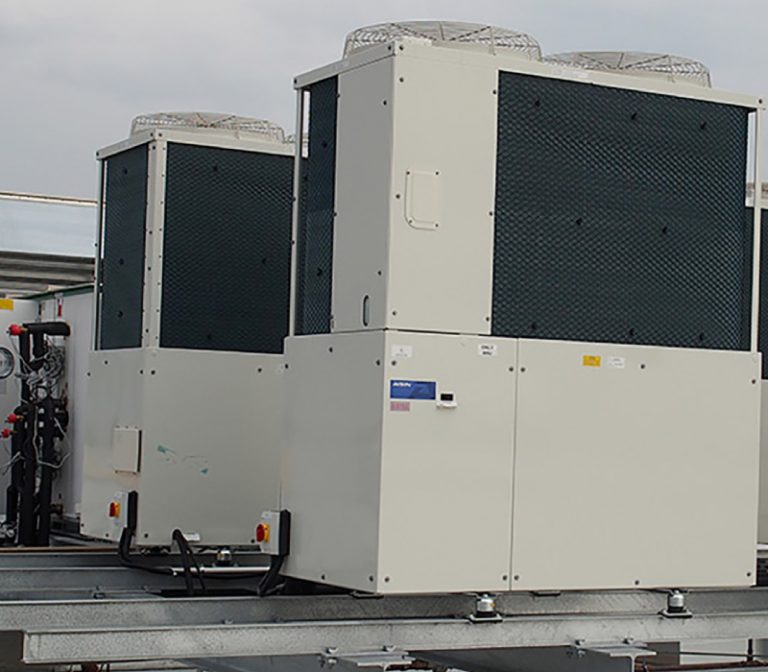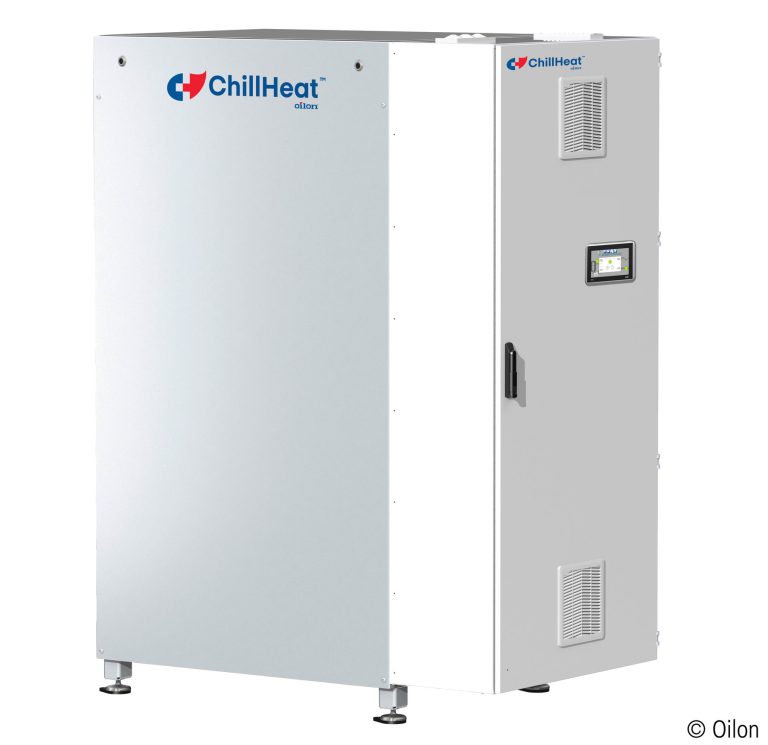
High-temperature heat pumps
Industrial heat pumps that produce hot water up to 120ºC from waste heat or the air, from 30 to 2,000 kW.
- Cooling capacity
- 29,3 – 184 kW
- Heating capacity
- 30 – 2.000 kW
- Manufacturers
- Oilon and Enerblue
Technology
The compression cycle explained, and how a gas engine-driven compression heat pump works.
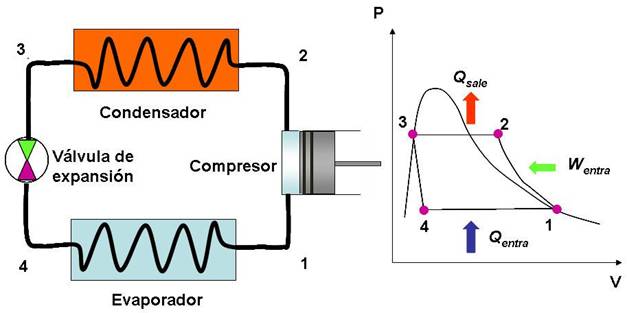
The compression cycle is the thermodynamic principle used in most heat pumps and mechanical compression refrigeration systems.
Unlike the absorption cycle, the refrigerant pressure is raised by a mechanical compressor, driven by an electric motor or by an internal combustion engine.
The basic cycle consists of four main processes:
The refrigerant absorbs heat at low pressure and evaporates.
The refrigerant vapour is compressed, raising its pressure and temperature.
The refrigerant releases heat to the user circuit and condenses.
The liquid refrigerant drops in pressure and temperature before returning to the evaporator.
In simplified form:
Evaporator → Compressor → Condenser → Expansion → Evaporator
The same principle supports different heat pump configurations, depending on the heat source, the user circuit, the drive system, the refrigerant and the required temperature level.
Gas-driven compression heat pumps use the same vapour compression refrigeration cycle, but the compressor is driven by a gas-fired internal combustion engine.
The engine supplies the mechanical energy needed to drive the compressor and, at the same time, generates heat that can be recovered to improve the overall energy use of the system.
The refrigeration cycle keeps the four fundamental stages:
Evaporation → Compression → Condensation → Expansion
On top of these stages, thermal energy can be recovered from the engine, mainly from its cooling system and exhaust gases.

This configuration combines cooling, heating and thermal energy recovery in a single system, depending on the operating conditions and the thermal needs of the installation.
Electric heat pumps use the same vapour compression cycle, but the compressor is driven by an electric motor.
The cycle transfers thermal energy from a lower-temperature source to a higher-temperature user circuit, using electricity as the driving energy.
System performance depends on several factors, including:
Advances in refrigerants make it possible to build units with a low global warming potential (GWP) and, in certain configurations, to use natural refrigerants such as R290 (propane) and R744 (CO2), as well as very low-GWP HFO refrigerants such as R1234ze(E) and R1233zd(E).
Each refrigerant has different thermodynamic properties, working pressures, critical temperatures and safety requirements. Choosing the refrigerant is therefore part of the cycle design and determines how the cycle can operate.
In an air-to-water heat pump, the air acts as the heat source or heat sink and the hydraulic circuit delivers the useful thermal energy to the installation.
In heating mode, the evaporator extracts thermal energy from the air and the condenser transfers the heat to the water circuit.
In simplified form:
Air → Evaporator → Compressor → Condenser → Hot water
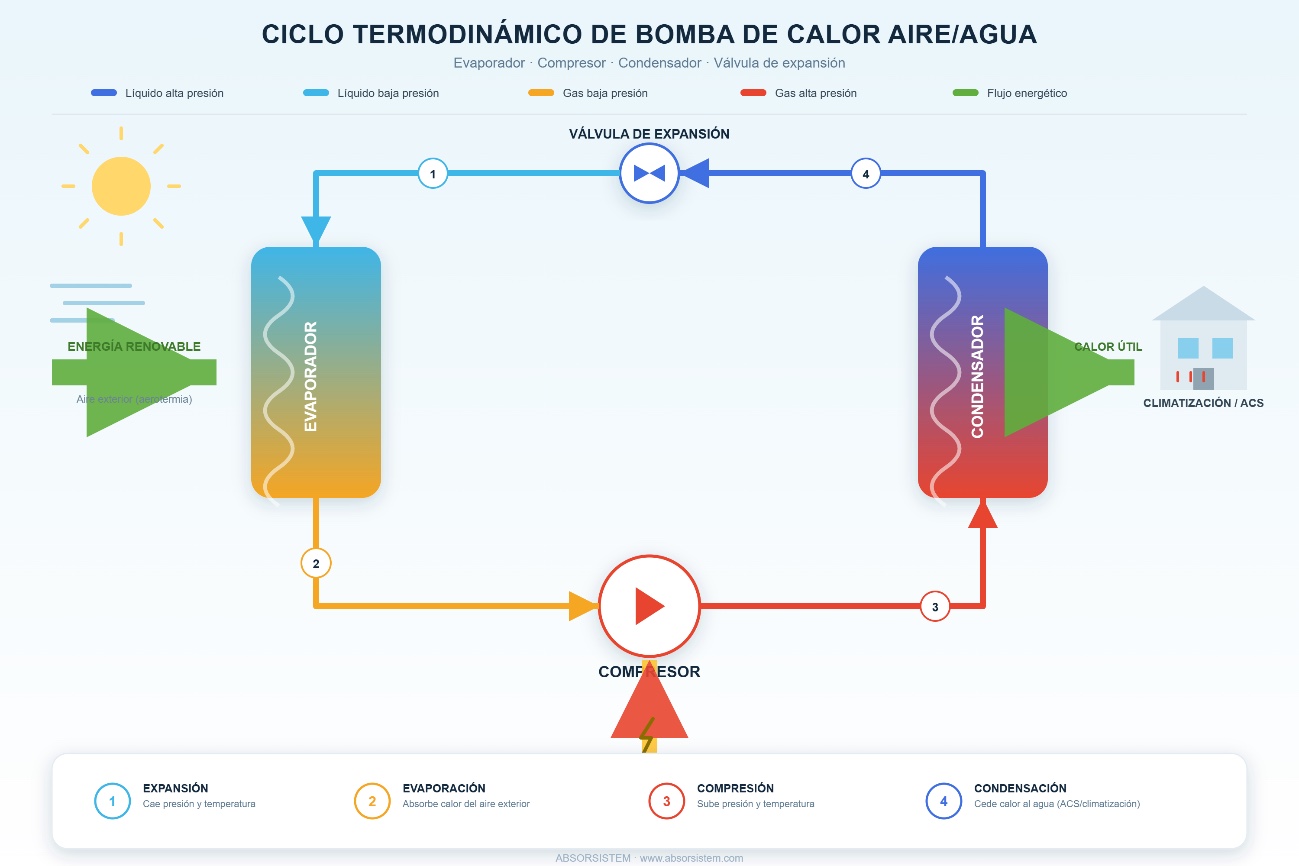
How the cycle performs depends on the source conditions and the required water temperature. The greater the temperature lift, the more work the compressor normally has to do and the lower the instantaneous efficiency of the cycle.
Natural refrigerants such as R290 or R744, and other low-GWP refrigerants, allow these technologies to be adapted to different temperature ranges and operating conditions.
Water-to-water heat pumps exchange energy between two hydraulic circuits through a compression refrigeration cycle.
One circuit acts as the heat source and the other as the user circuit.
The source can be, among others:
One of the main advantages of this configuration is that it can work with a heat source whose temperature and stability may be more favourable than those of outdoor air.
The cycle recovers waste heat and raises its temperature level, turning energy that cannot be used directly into useful heat for a process or installation.
In simplified form:
Heat source → Evaporator → Compressor → Condenser → User circuit
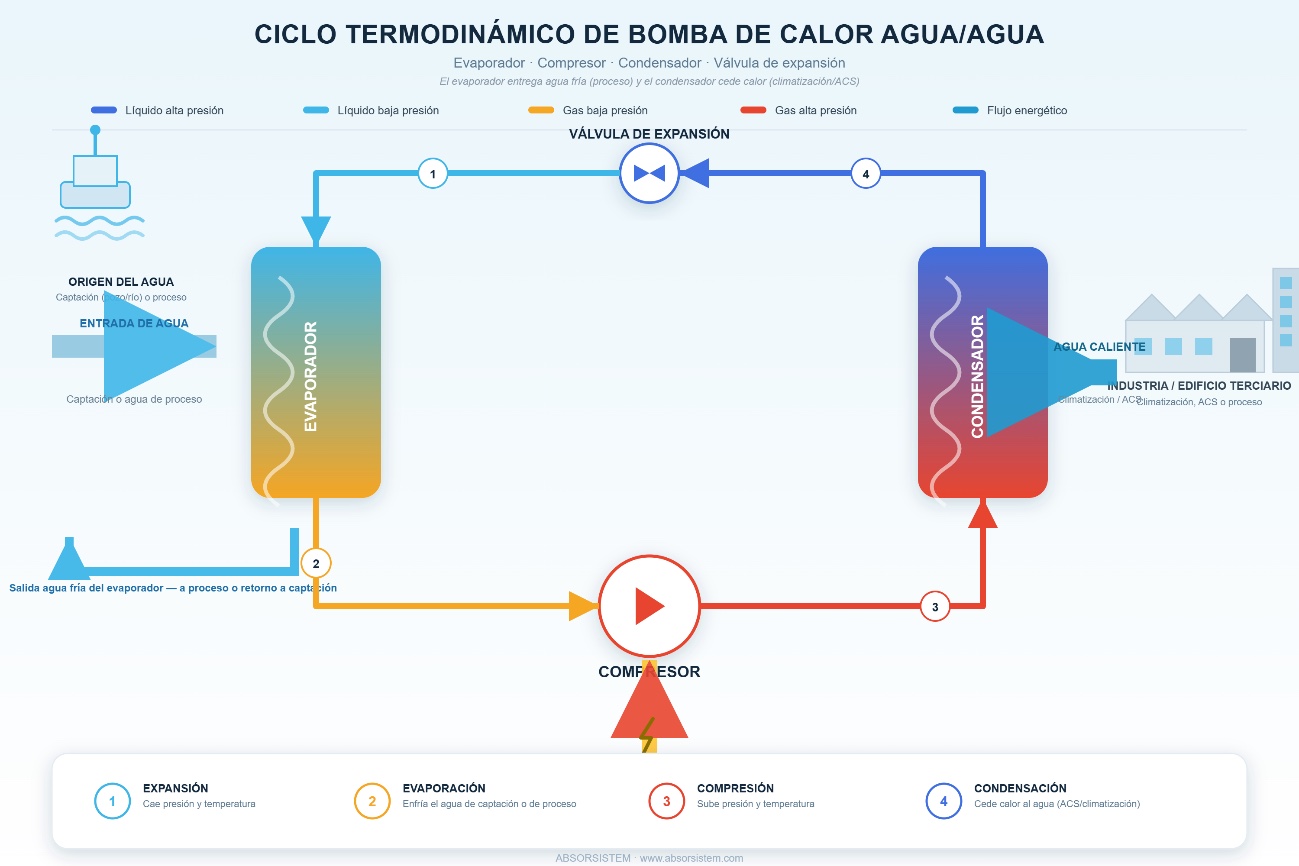
High-temperature industrial heat pumps use the vapour compression cycle to recover thermal energy available at low or medium temperature and raise it to levels suitable for industrial processes.
The principle is especially attractive where waste heat is currently released to the environment or removed by cooling systems.
The process can be shown in simplified form:
Waste heat → Evaporator → Compressor → Condenser → Useful high-temperature heat
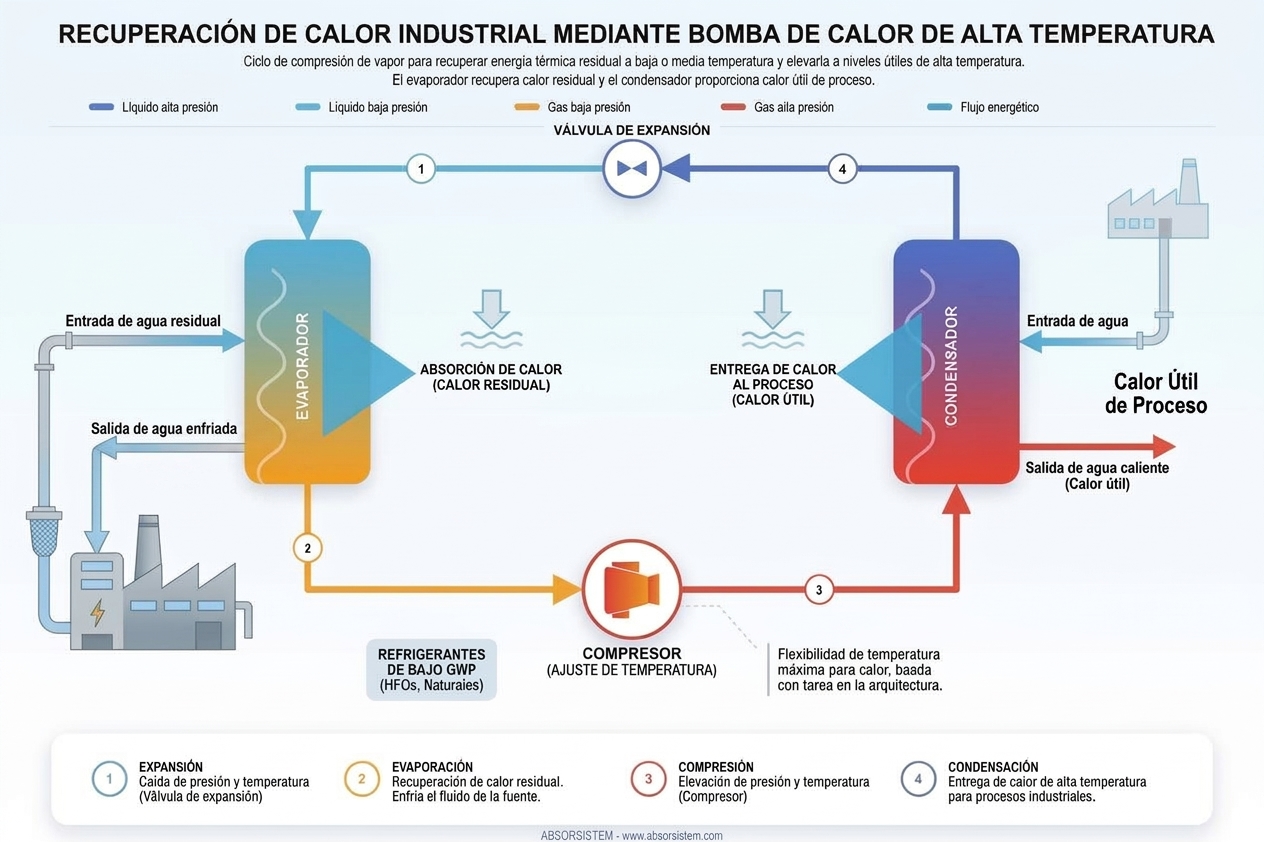
The maximum achievable temperature depends on the system architecture, the compressor, the refrigerant, the source conditions and the required condensing temperature.
Current technologies make it possible to build industrial heat pumps for different temperature ranges, including high-temperature applications and process heat recovery.
Low-GWP refrigerants, including certain HFOs and natural refrigerants, allow the cycle to be adapted to different temperature levels and environmental requirements.
Equipment
Industrial heat pumps that produce hot water up to 120ºC from waste heat or the air, from 30 to 2,000 kW.
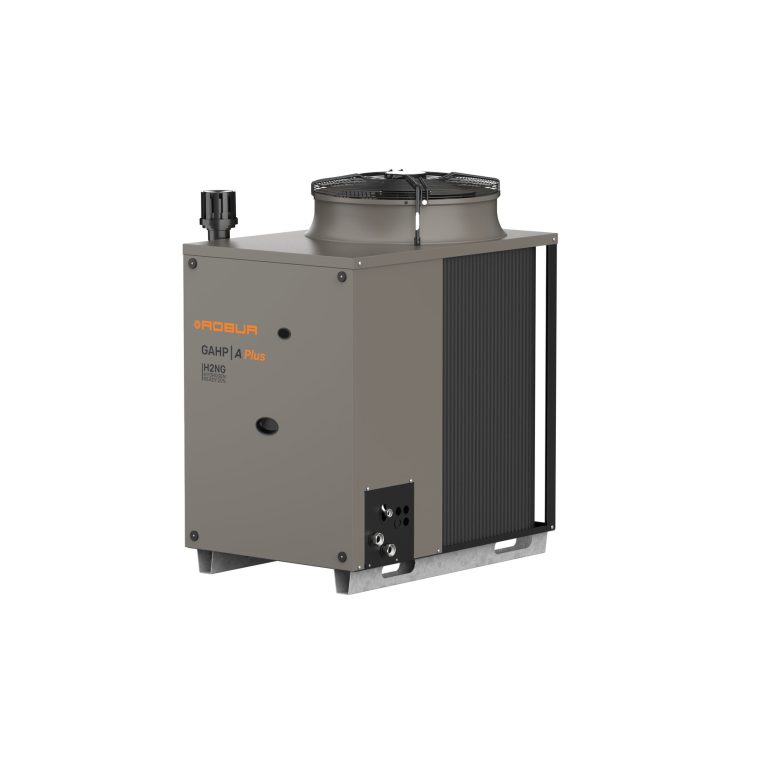
Heat pumps that use natural gas or LPG for heating, DHW and cooling, with minimal electricity consumption.
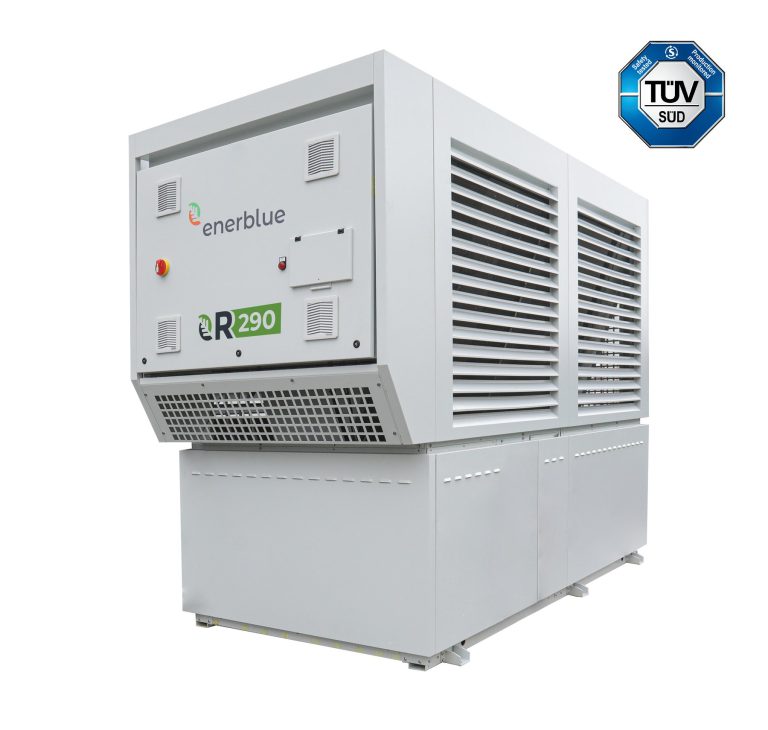
Enerblue air-to-water heat pumps with propane (R290) for heating, cooling and DHW up to 70ºC, from 26 to 361 kW.
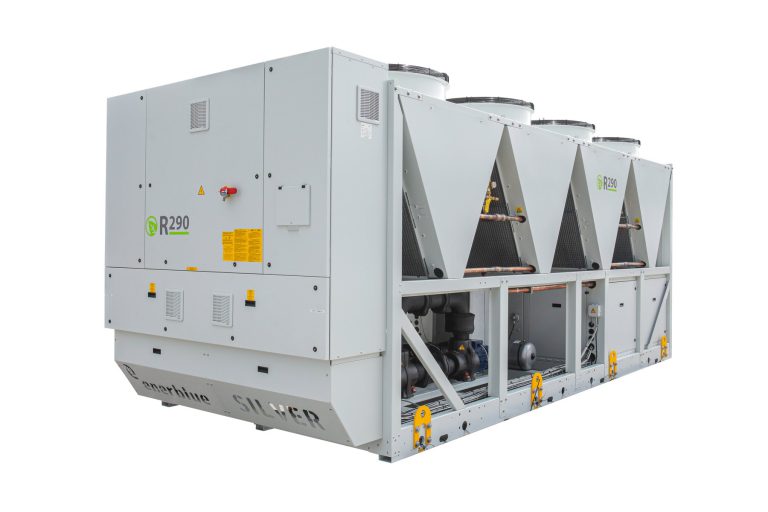
Enerblue water chillers with propane (R290) for air conditioning and industrial processes, from 30.5 to 768 kW.
Applications
Projects
Manufacturers
We'll help you compare absorption, compression and cogeneration based on the energy available and the demand.