
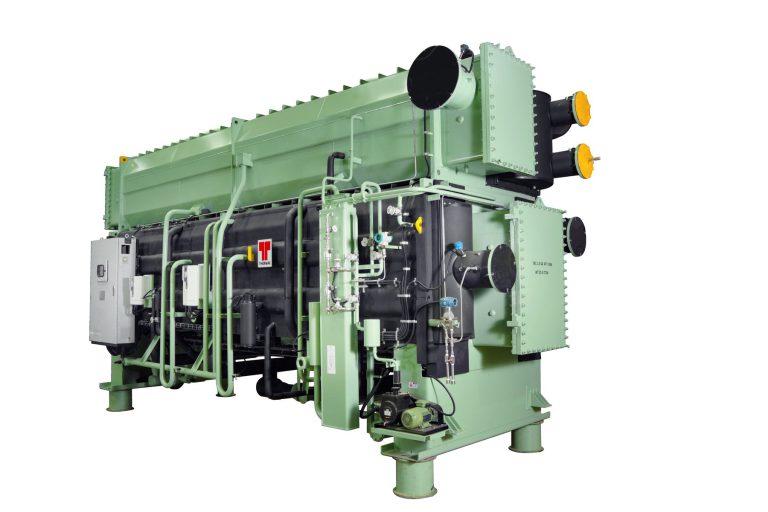
Absorption chillers
Chillers that produce chilled water from heat sources: hot water, steam, gas or exhaust gas, from 17.6 kW to over 8 MW.
- Cooling capacity
- 17,6 – 8.122 kW
- Heating capacity
- 21 – 105 kW
- Manufacturers
- Yazaki, Thermax, and Robur
Technology
The principles of cogeneration and its basic technologies, micro-generation and trigeneration explained.
Cogeneration is the combined production, by the user, of electricity and useful thermal energy (heat) from a single fuel.
This simultaneous generation of heat and electricity makes better use of the primary energy converted than producing electricity and heat separately.

Cogeneration systems achieve overall efficiencies of around 85-90 %, which means that using electricity and heat simultaneously leads to high energy savings.
Natural gas is the primary energy most widely used to run cogeneration plants, which operate with gas turbines or gas engines. However, renewable energy sources and waste such as biomass can also be used.
Cogeneration systems are usually classified according to the prime mover used to generate electricity.
Cogeneration systems are based mainly on two electricity generation technologies: the reciprocating internal combustion engine and the gas turbine.
Reciprocating internal combustion engines convert the chemical energy contained in a fuel into electrical and thermal energy. A reciprocating engine works by turning the linear, reciprocating movement of the pistons into the rotation of a shaft. Electricity is obtained from an alternator coupled directly to the engine shaft, while thermal energy is obtained as exhaust gas and hot water from the cooling circuits.

Gas turbines convert the chemical energy contained in a fuel into electrical and thermal energy.
Gas turbines follow the Brayton cycle. Air is drawn in from the atmosphere and compressed by the rotary compressor, then led to the combustion chamber, where the combustion products expand through the turbine down to atmospheric pressure. Electricity is obtained from an alternator coupled to the turbine shaft, directly or through a gearbox, which uses the net work of the cycle.

Micro-cogeneration is cogeneration of up to 50 kW of electrical output.
Micro-cogeneration with gas microturbines or small combustion engines has been successfully implemented in commercial-sector installations as diverse as hospitals, hotels and offices.

These units typically work as heat generators, supplying buildings with domestic hot water (DHW) and heating; in other words, they work like conventional boilers.
Unlike a conventional boiler, micro-cogeneration systems generate electricity along with heat, very efficiently. They save fuel, cut greenhouse gas emissions and reduce electricity generation costs.
These units run in parallel with the electricity grid but can also export electricity to it. The heat generated is generally used for heating, DHW and occasionally cooling, contributing to energy savings.

Under the Spanish Technical Building Code, the minimum solar contribution required for the domestic hot water energy supply of every new home can be replaced by other systems that use renewable sources or cogeneration processes. In each case, the energy, physical and operating characteristics will therefore determine whether micro-cogeneration units or solar collection systems are viable.
Meeting heat demand with micro-cogeneration systems for DHW, heating and cooling has advantages over conventional systems (boilers) and, in many cases, over systems based solely on solar thermal collectors.
Trigeneration is defined as the combined generation of electricity, thermal energy in the form of heat and thermal energy in the form of cooling.
It therefore uses the waste heat from power generation to produce heating, cooling and electricity with a simple integrated system running on a single fuel.
A trigeneration system is created by coupling a cogeneration system, based on an engine or a turbine, with an absorption machine that chills water using the thermal energy contained in the cooling water and/or the exhaust gases of the alternator’s prime mover.

Because of their high efficiency, trigeneration plants greatly reduce the energy cost of production processes wherever large amounts of heat in the form of steam or hot water, cooling or electricity are required.
Trigeneration systems are technically and economically viable at sites that consume cooling but not heat, generally related to industrial processes. They can also be used in the commercial sector (hotels, hospitals, shopping centres, etc.), where cooling for air conditioning is needed as well as heat, and where the seasonal nature of these loads, heat in winter and cooling in summer, prevented a cogeneration plant from operating normally. Because the heat is also used to produce cooling, heat use is more stable.
Adding an absorption machine gives a more even thermal demand curve throughout the year, allowing the cogeneration plant to be larger and to run for longer.
In trigeneration projects, the heat needed to drive the absorption refrigeration cycle can be obtained from:


Equipment
Chillers that produce chilled water from heat sources: hot water, steam, gas or exhaust gas, from 17.6 kW to over 8 MW.
Projects
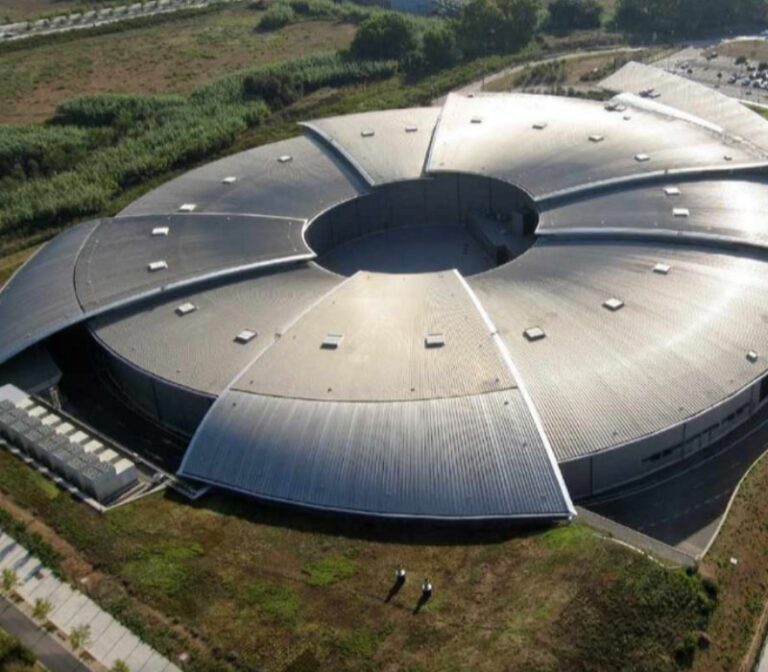
ST4 district heating & cooling with Thermax absorption chillers at Alba Technology Park, Cerdanyola del Vallès, Barcelona

Cooling with a biomass steam boiler and a Thermax absorption chiller at Bodegas Miguel Torres
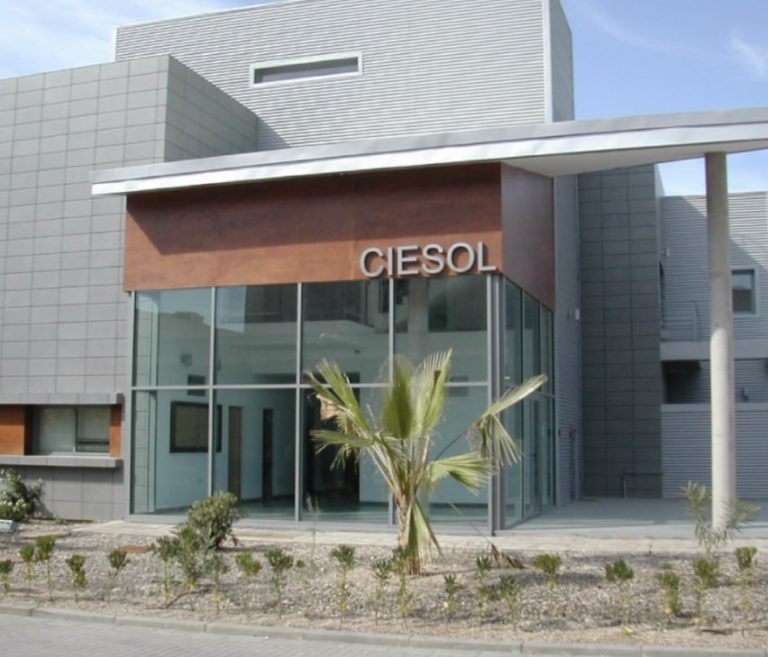
Solar HVAC system with an absorption chiller in the CIESOL building at the University of Almería

La Ventajola housing development (La Cerdanya). Gas-fired ground-source heat pumps for heating and DHW.

HVAC system with an AISIN GHP gas heat pump at Hotel Sant Metges in Sant Julià de Ramis (Girona)

District heating with ROBUR air-source gas heat pumps on the Mas Sallent estate
Manufacturers
We'll help you compare absorption, compression and cogeneration based on the energy available and the demand.
